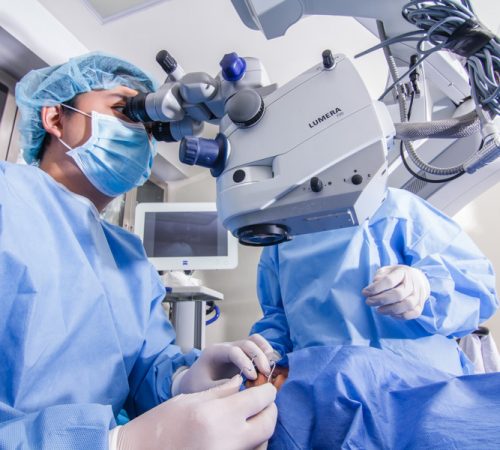
Nearsightedness, or myopia, can make everyday tasks challenging, from reading street signs to working on a computer or enjoying outdoor activities. Glasses and contact lenses provide temporary correction, but many people seek a long-term solution for clear vision without relying on these aids. Phakic IOL offers a safe and permanent method to correct nearsightedness, helping patients regain sharp vision and improve quality of life. This advanced procedure is increasingly popular among those with moderate to high myopia who may not be ideal candidates for laser vision correction.
What is Phakic IOL?
Phakic IOL refers to a type of intraocular lens that is implanted into the eye without removing the natural lens. Unlike standard cataract surgery where the natural lens is replaced with a lens implant, Phakic IOL leaves the eye’s lens untouched, providing vision correction while maintaining natural eye functions. When an intraocular lens is implanted after cataract surgery, it is called pseudophakic IOL.
Phakic IOL works by correcting refractive errors, which are imperfections in the eye’s focusing ability that lead to blurred or distorted vision. The procedure is designed to treat moderate to severe nearsightedness, providing a long-lasting solution that reduces dependence on glasses or contact lenses.
How Phakic IOL Works
The Phakic IOL procedure involves a precise surgical process performed by experienced ophthalmologists. A small incision is made at the front of the eye, and the lens, typically made of silicone or plastic, is carefully inserted. The lens is positioned either in front of or behind the iris, depending on the patient’s eye structure and prescription requirements. Once in place, the Phakic IOL works with the eye’s natural lens to bend light correctly, enabling clear vision.
Phakic IOL differs from LASIK or PRK in that it does not remove or reshape the cornea. This makes it an excellent option for patients with high prescriptions, thin corneas, or other corneal limitations. The procedure is reversible if necessary, and the lens can be replaced or removed without affecting the natural lens.
Who Can Benefit from Phakic IOL?
Phakic IOL is suitable for individuals with moderate to high myopia who are seeking a permanent correction without removing their natural lens. Ideal candidates include patients aged 21 to 45 with stable vision who may not be suitable for laser vision correction due to thin corneas or high prescriptions. Candidates should be free of eye diseases such as glaucoma, cataracts, or severe retinal conditions.
Consultation with an experienced ophthalmologist at a reputable clinic, such as Peregrine Eye and Laser Institute (PELI), ensures that patients receive a thorough evaluation. Measurements of corneal thickness, anterior chamber depth, and overall eye health determine candidacy and optimal lens selection. Phakic IOL can significantly reduce dependence on glasses or contacts, improving daily life and professional activities.
Advantages of Phakic IOL Over Other Options
Phakic IOL offers several advantages compared to other vision correction procedures. One of the most significant benefits is that it preserves the natural lens, which helps maintain natural focusing abilities and reduces potential complications associated with lens removal. Unlike LASIK, Phakic IOL can correct high prescriptions that are otherwise difficult to treat with laser-based methods.
The procedure is also reversible, allowing the lens to be removed or replaced if vision changes over time. Recovery from Phakic IOL surgery is relatively fast, with many patients noticing clearer vision within a day or two. The lens provides a permanent solution to nearsightedness, reducing reliance on glasses or contacts and improving overall quality of life.
About Peregrine Eye and Laser Institute (PELI)
Peregrine Eye and Laser Institute (PELI) is a leading provider of advanced eye care services in Metro Manila. Established in 2013 by Mr. Jimmy Tan, Dr. Harvey Uy, and Dr. Pik Sha Chan Uy, PELI was founded to deliver world-class eye care using cutting-edge technology and a patient-focused approach. The institute operates three key facilities in Makati, Manila, and Quezon City, ensuring accessibility for patients across the city.
PELI’s doctors bring extensive expertise, with training from prestigious institutions such as Harvard Medical School, Johns Hopkins University, UCLA, California Pacific Medical Center, University of Wisconsin, and Singapore National Eye Center. Their combined experience spans decades of clinical and surgical practice, including complex cases.
The institute is equipped with advanced ophthalmic instruments and state-of-the-art operating rooms designed for safety and efficiency. PELI prioritizes patient comfort, with modern facilities and a trained staff that provides professional, compassionate care. Their approach ensures that every patient receives tailored advice and treatment, making Phakic IOL surgery a seamless and reassuring experience.
What to Expect During Your Phakic IOL Procedure
Preparation for Phakic IOL surgery begins with a detailed consultation and comprehensive eye examination. Measurements and tests determine the best lens type and placement for each patient. On the day of surgery, local anesthesia is used to ensure comfort while the lens is carefully inserted through a small incision.
The procedure is typically completed within 30 to 45 minutes, depending on the complexity and patient needs. Post-surgery, patients may experience mild discomfort or blurred vision for a short period, but vision usually improves within a few days. Follow-up appointments are scheduled to monitor healing and ensure the lens is correctly positioned. Patients can resume normal activities relatively quickly, with most experiencing significant improvement in vision shortly after the procedure.
Cost and Accessibility
While the cost of Phakic IOL surgery varies based on individual prescriptions and needs, PELI ensures that treatment remains accessible to patients seeking high-quality care. Consultation fees and pricing are transparent, with potential financing options available for patients who require assistance. The institute’s focus on advanced technology and skilled professionals ensures that patients receive value for the investment in their vision.
Takeaway
Phakic IOL provides a permanent solution for nearsightedness, combining advanced technology with the expertise of experienced ophthalmologists. Patients benefit from clear vision, reduced dependence on glasses or contacts, and minimal recovery time. Peregrine Eye and Laser Institute offers comprehensive care with state-of-the-art facilities, highly trained doctors, and personalized service to ensure optimal outcomes for every patient. For those seeking a reliable and effective method to correct myopia, Phakic IOL is an option worth exploring. Schedule a consultation at PELI to determine if Phakic IOL is right for you and take the first step toward sharper, clearer vision.
FAQs About Phakic IOL
What is Phakic IOL?
Phakic IOL is a surgically implanted lens that corrects nearsightedness without removing the natural lens, providing a permanent vision solution for suitable candidates.
Is Phakic IOL safe?
Yes, Phakic IOL is a safe procedure when performed by experienced ophthalmologists. PELI ensures thorough preoperative assessments and uses advanced technology to maximize safety.
How long does it take to recover from Phakic IOL surgery?
Most patients experience improved vision within a day or two, with complete stabilization occurring within a few weeks. Follow-up appointments ensure proper healing.
Who is a good candidate for Phakic IOL?
Ideal candidates are adults with stable moderate to high myopia, healthy eyes, and corneas that may not be suitable for laser vision correction.
Can Phakic IOL be removed or replaced?
Yes, the procedure is reversible. The lens can be removed or replaced if vision changes or if future treatments are needed.
How does Phakic IOL compare to LASIK?
Phakic IOL preserves the natural lens and is suitable for higher prescriptions, whereas LASIK reshapes the cornea and may not be ideal for patients with thin corneas or high myopia.
Does Phakic IOL require ongoing maintenance?
Once implanted, Phakic IOL requires routine eye exams, but it does not require regular replacement or adjustments.